East Midlands
IT support across the East Midlands.
One team, one office, the whole region covered. We're based in Farnsfield — almost exactly the centre of the East Midlands — so Nottingham, Derby, Mansfield, Newark, Lincoln, Chesterfield, Sheffield and Leicester are all within comfortable same-day onsite range. Managed IT, cybersecurity, cloud, Microsoft 365, business continuity and connectivity — one team across every site.
Whether you run one office or sites in several locations, the experience is the same wherever you are: the same engineers, the same standards, and IT run as one joined-up setup rather than a patchwork of local arrangements.

Run everything through one team — one contract, one number to call, one set of standards across every site. If that's the kind of IT coverage you're after — that's what we do.

Based in Farnsfield
Farnsfield. Right in the middle.
Our head office is in Farnsfield, Nottinghamshire — positioned almost exactly in the centre of the East Midlands. That's deliberate. Nottingham is 25 minutes away, Mansfield and Newark 15, Lincoln, Derby and Chesterfield about 30, Sheffield and Leicester about 40. Every key location in the East Midlands is within comfortable same-day onsite range.
Why that matters
Why regional coverage actually matters.
Many businesses operating across several locations have a problem they don't always articulate until it costs them money: fragmented IT. An MSP in one city, someone else handling another site, different documentation, different contacts. It works until it doesn't — and when something fails that touches more than one site, nobody's quite sure who's responsible.
That fragmentation is what happens when IT gets bought location by location. Each provider is optimised for their own geography, not for your business. Your team ends up managing several supplier relationships, each with its own contacts, contracts and renewal dates. Costs stay higher than they should because nothing's bought or managed as one, and your IT never quite behaves as a single, joined-up setup.
Proper regional coverage changes that — one team, one monitoring system, one set of standards. Backups aren't duplicated or fragmented, security is one approach rather than several, and when you open a new site, you extend the coverage that's already working instead of negotiating a new contract. Your whole estate, visible and managed from one place.
The difference
Why businesses stick with us.
People, not tickets
You'll know your engineers by name. They understand your business inside out. That's how support should work.
Fast. Genuinely fast.
Average response under 15 minutes. You call, someone picks up, and it gets sorted. And every key location in the region is within comfortable same-day onsite range.
We fix it before you notice
24/7 monitoring catches problems early. Patches are applied and backups tested before anything fails, so most issues are sorted before they reach your team.
We'll tell you the truth
If something isn't worth doing yet, we say so — and if a cheaper option works fine, we won't push premium. No upselling, just clear advice.
Fitted to your business
Your IT support reflects your business, not a template. Office-based, remote, hybrid, running shifts — we build it around how you actually operate.
Plain English, every time
We explain things clearly because that's what respect looks like. No jargon, no condescension.
How it works
Getting started is simple.
We listen
We understand your business — how your team works, what they depend on, what's been causing headaches.
Then we build the foundations
Full audit, clean documentation, monitoring. Everything's in place so support is fast and consistent.
We get to work
Email, phone, portal, live chat — whatever works for you. Every ticket handled by someone who knows your setup.
Keep improving
Regular reviews, clear reporting, forward planning. We actively make things better, month after month.
Onboarding is free — we don’t charge labour to bring you on board.
What we do
Your whole IT estate. One relationship.
Managed IT Support
- Remote & onsite helpdesk
- Full outsource or co-managed
- Onboarding & offboarding
- Device setup & management
Cybersecurity
- 24/7 managed SOC & EDR
- Penetration testing
- Security awareness training
- Incident response
Cloud Solutions
- Private cloud, Azure & AWS
- Cloud migrations & planning
- Hosting, domains & DNS
- Hybrid & multi-cloud management
Business Continuity
- Backup & disaster recovery
- Continuity planning & testing
- Failover & replication
- Recovery time objectives
Microsoft 365
- Licensing & migrations
- Security configuration
- Teams, SharePoint & Exchange
- Ongoing admin & optimisation
Connectivity & Comms
- Business internet & leased lines
- VoIP hosted in our private cloud
- Mobile contracts & management
- Carrier coordination
In practice
What this actually looks like.
A few snapshots of the day-to-day — how the service feels once it’s running, not the full list of what we cover.
Your data, in our building
We own and run our own private cloud — a facility that's ours from end to end. Host with us and you never have to wonder where your data sits: you can come and have a look round, and put your hand on the kit it runs on. That makes compliance, cyber insurance and sensitive data far simpler.
Everything monitored, all the time
Your infrastructure is watched 24/7 by our own monitoring platform. We don't wait for you to report problems — we see them first. Failing drives, unresponsive services, backup errors — most issues are caught and resolved before they have any impact on your team's working day.
Straight to someone who knows you
No call centres, no ticket queues that disappear into the void — when you call, you're speaking to the team that actually looks after your systems, with the context and the authority to get it sorted without being passed around.
Quarterly reviews with substance
A clear agenda every quarter — system performance, security posture, upcoming projects, budget. A straight assessment of where things stand and what needs attention next, with no padding and no upselling. You leave with a plan, not a proposal.
The team
The same people, across all your locations.
When you call us, you get an engineer — not a ticket number, not an automated response, not someone reading from a script. A real person who already knows your systems, understands your business, and has the authority to make decisions. Most of our engineers are senior, which means the person helping you has probably solved dozens of problems like yours before you finish explaining yours.
Our team is UK-based, directly employed, and deeply experienced. We've deliberately built small — a low client-to-engineer ratio by design — so your team isn't competing for attention with hundreds of other companies. When something urgent happens at 3pm on a Thursday, there's usually someone available who already knows your network.
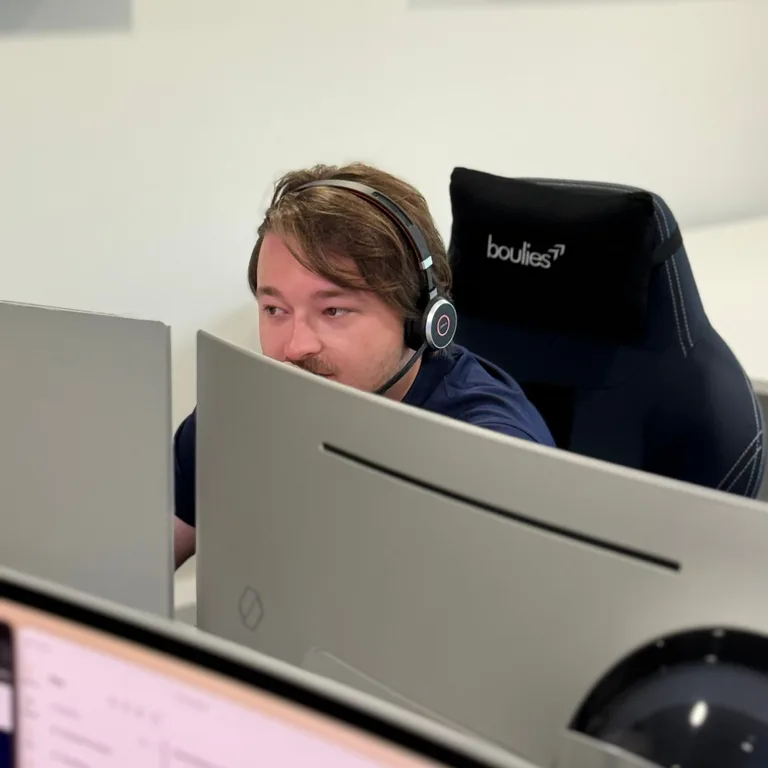
The same team every time — so nobody explains the same problem twice.
Every IT company says they’re responsive and easy to deal with. What counts is whether it holds up once you’re a client.
We were getting frustrated with slow responses and vague answers from our old provider. C2 came recommended and we haven’t looked back. They’re quick to reply, explain things in plain English, and just quietly get on with it.
Since switching to C2, we’ve genuinely noticed a difference. The team are easy to deal with, quick to respond, and clearly know their stuff. It’s a relief knowing our IT’s in safe hands.
I’m not technical at all, but the team at C2 never make me feel silly for asking questions. They’re friendly, patient, and things actually get sorted first time. It’s made my job a lot less stressful.
The bigger picture
All your IT, working together.
Most businesses we speak to have outgrown their IT provider without realising it. The phone still gets answered, but there's nobody thinking ahead. No forward planning, no quarterly reviews asking what your business needs next. It's maintenance, not partnership. That might work for the first couple of years, but it creates risk.
When everything's under one roof, problems get solved faster and nothing falls between the cracks.
We built this company to be different. One team handles everything — managed IT, cybersecurity, cloud, business continuity, Microsoft 365, connectivity. Your business doesn't run in silos, so why would your IT? When we're looking after the whole picture, decisions get made faster. Security recommendations take your infrastructure into account. Cloud migrations factor in your connectivity. Nothing gets lost in the handoff between vendors.
Your team stops juggling vendor relationships and gets on with running the business. Your infrastructure stays solid, your security stays tight, and you're better positioned for whatever comes next. One team, one relationship, one phone call.
If that’s the kind of IT partner you’re after, it starts with a conversation.
Talk to usRelated insights
From our insights.
FAQ
Got questions?
Yes — and beyond it. We're based in Farnsfield, right in the centre of the region, and we support businesses across the East Midlands and further afield. The locations listed on this page are the areas we work in most, but we're not limited to them. What matters is that wherever you are, you get the same team, same service commitment, and same response standard. No gaps in coverage and no confusion about who's looking after your infrastructure. It's one unified operation.
That's exactly what we're built for. Instead of managing three separate support contracts with three separate providers (which is what most businesses end up doing), you get one team overseeing your entire estate. They use the same monitoring system to watch all your locations, coordinate updates so nothing conflicts, and handle security consistently across every site. When something goes wrong in one location but affects another, nobody's confused about who's responsible — it's us, and we fix it. That alignment is why regional coverage works.
You get the same core team. We structure things so that a consistent group of engineers knows your setup inside out — your locations, your priorities, how your business actually works. You have a single point of contact who coordinates everything, and if they're unavailable, the person covering them already has full context because they're part of the same team sitting in the same office. No cold transfers, no reading your notes back to you — they already know what's happening with your infrastructure.
Unified monitoring is the backbone. Every location's infrastructure feeds into the same system, which means everyone gets watched equally. Your backups in Nottingham don't take priority over your network in Sheffield because the monitoring system doesn't know the difference — it just knows a problem when it sees one. We apply identical security standards, update schedules, and response commitments across all your sites. Regional coverage only works if it's actually unified — one team, one monitoring platform, one consistent standard everywhere.
Not difficult at all. We bring the new location into your existing support structure — same monitoring, same team, same commitment. There's no renegotiating contracts or hunting for a new provider. It's a case of extending what's already working rather than starting from scratch. We handle the technical integration and setup in a matter of days, and your team gets access to the same single point of contact they're used to from day one of operations.
We work with businesses of all sizes — from smaller teams with a single office to larger organisations spread across multiple locations. The service scales to fit. Whether you've got a dozen people or a few hundred, you get the same level of attention, the same engineering team, and the same proactive approach. Every client gets a named point of contact and a team that knows their setup inside out. The size of your business doesn't change that.
Remote support almost always kicks in within minutes. Our monitoring catches problems automatically, so we're often investigating before you've even called. If the issue needs hands-on attention and remote fixes aren't working, we dispatch an engineer. From our office in Farnsfield, we can reach Nottingham in 25 minutes, Mansfield in 15, Derby in 30, and so on. So worst case, there's someone physically there within an hour of the issue being reported. For most problems though, they're resolved before anyone needs to get in a van.
Less painful than you probably think. We've done this dozens of times — businesses with fragmented IT coverage across multiple locations wanting consolidation. We work site by site, usually starting with your most critical location so you can see how the process works. We audit what each existing provider is doing, document everything thoroughly, and bring each location onto our systems without service interruption. You have continuity from day one. Most multi-location transitions are completed within four to six weeks, and you'll have noticed almost nothing except that you're suddenly managing one supplier instead of three.
If your question isn’t here, ask it directly — you’ll get a straight answer.
Talk to us


